More than six years after changed the world, scientists are still trying to understand one of its biggest mysteries: Why do some people continue to suffer from Long years after recovering from the initial ?
A groundbreaking new study has now uncovered evidence that could bring researchers one step closer to the answer.
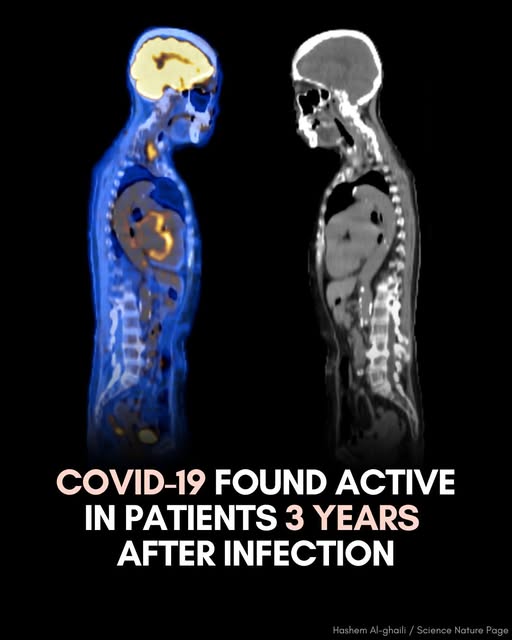
Researchers followed 24 people who had previously been infected with COVID-19 for nearly 900 days (almost three years). Instead of relying only on blood tests or patient questionnaires, they used advanced PET imaging technology to observe how the immune system behaved throughout the entire body over time.
What they found was surprising.
 The Immune System Was Still on High Alert
PET scans revealed unusually high activity of T cells, specialized immune cells that normally help the body eliminate viruses and infected cells. Rather than returning to their usual resting state after recovery, these immune cells remained active in several organs.
Researchers observed abnormal immune activity in the:
 Lungs
Lungs Heart wall
 Spinal cord
 Gastrointestinal tract
 Gut tissues
This pattern was not seen in people whose scans were taken before the COVID-19 pandemic, making the findings especially significant.
 Viral RNA Was Found Years Later
Perhaps the most remarkable discovery came from gut tissue biopsies.
In several participants, scientists detected SARS-CoV-2 RNA—genetic material from the virus—still present nearly three years after the original infection.
This does not necessarily mean that the virus is actively multiplying or causing a new infection. Instead, it suggests that viral remnants, or possibly virus persisting in certain tissues, may remain hidden in the body, continuing to stimulate the immune system long after the acute illness has resolved.
This idea is known as the “viral reservoir” hypothesis, and it has become one of the leading explanations for Long COVID.