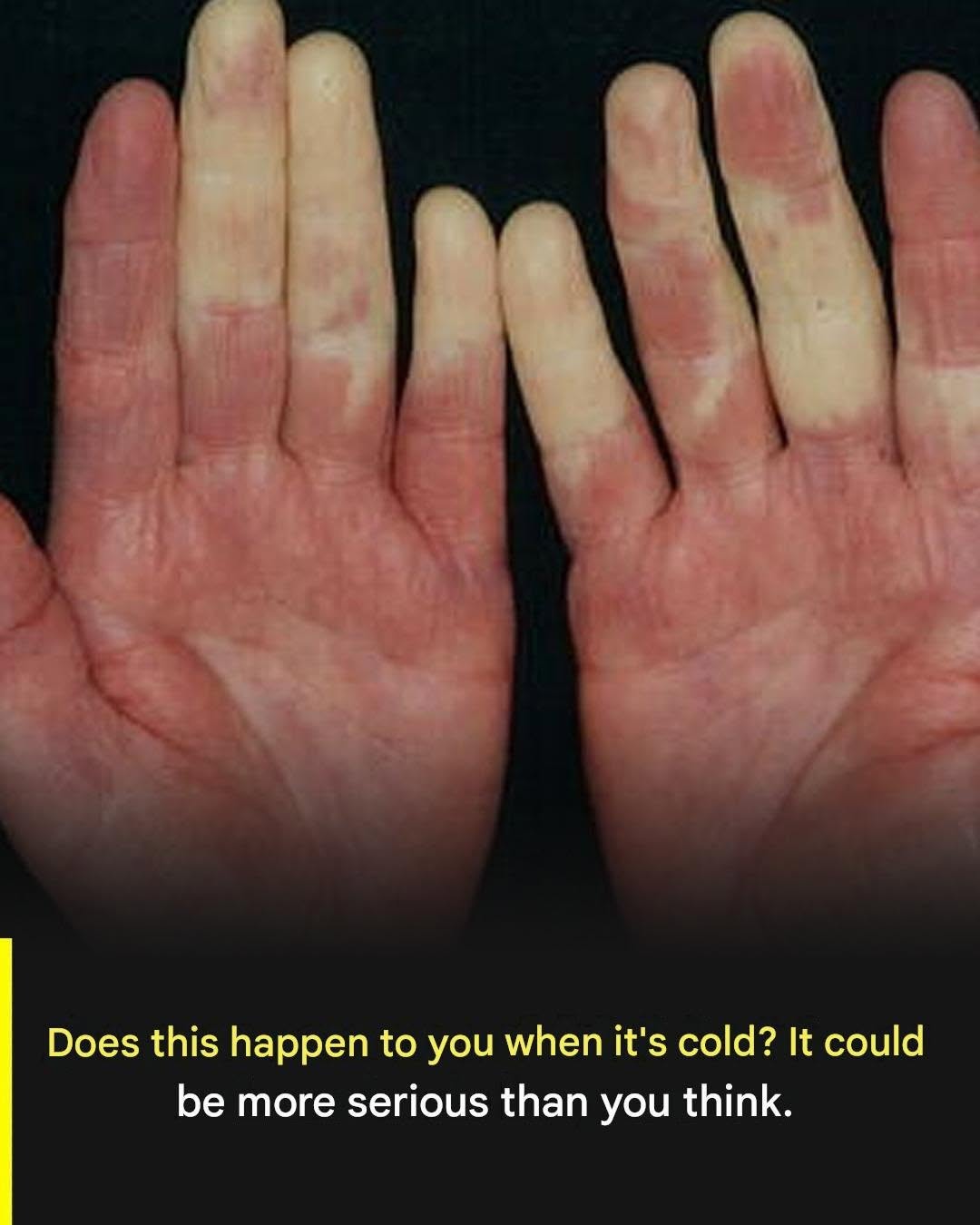
If you’ve ever noticed your fingers turning white, purple, or blue in cold weather, you might be experiencing a phenomenon called Raynaud’s syndrome . While it may seem like a normal reaction to the weather, this circulatory disorder could indicate an underlying problem that needs attention.
Raynaud’s phenomenon is a condition in which certain areas of the body, primarily the fingers and toes, experience reduced blood flow in response to cold temperatures or even stress. This occurs because the blood vessels narrow excessively , restricting circulation and causing changes in skin color.
How to identify it?
Raynaud’s episodes usually follow a characteristic pattern:
 White phase (pallor): Lack of blood flow makes the fingers appear pale or even completely white.
 Blue phase (cyanosis): As oxygen is depleted in the tissues, the fingers may turn bluish or purple.
 Red phase (reactivation): When blood begins to circulate again, the fingers become red and may feel warm, tingly, or sore.
Although this phenomenon can occur in isolation (primary Raynaud’s) without being related to another disease, it can also be a symptom of a more serious underlying problem (secondary Raynaud’s), such as autoimmune diseases or vascular disorders.
When should you worry?
While many people with primary Raynaud’s can manage it without major complications, in more severe cases episodes can become frequent and prolonged, increasing the risk of finger ulcers and even tissue damage.
It is advisable to consult a healthcare professional if:
 The episodes are recurrent and painful. It affects quality of life or prevents daily activities. There are wounds or sores on the fingers. It is accompanied by other symptoms such as joint pain, fatigue, or skin changes.
Learn more from Dr. Florencia Carrozza
If you have questions about this phenomenon and want to learn more about how to prevent and manage it, Dr. Florencia Carrozza shares valuable information on her professional Instagram account . From tips for protecting your hands in winter to warning signs you shouldn’t ignore, her content can help you better understand this condition.
 Follow her on Instagram and stay informed about your vascular health.
Don’t ignore the signals your body gives you. If your fingers change color in the cold, it may be time to pay closer attention and consult a specialist.