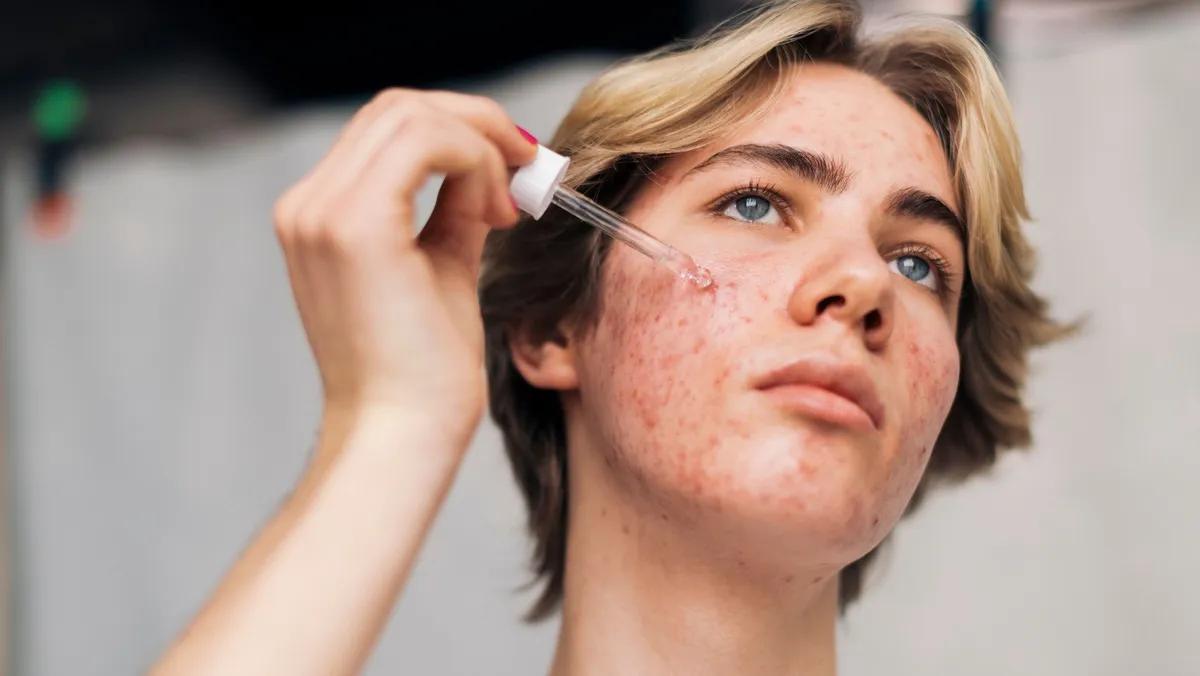
Acne disease begins inside the hair follicle.
Acne, or common acne, affects the pilosebaceous unit, which consists of the hair follicle and the sebaceous gland connected to it, and often appears on the face, chest, back and shoulders, where there are large numbers of sebaceous glands.
The infection begins when keratinized skin cells and sebum accumulate inside the follicle opening, forming a microscopic plug called a primary comedon. If the opening remains closed, a whitehead appears, but if it opens onto the skin surface, a blackhead is formed.
Sebum is a waxy, oily substance produced by the sebaceous glands in the skin. It consists of triglycerides and waxes, and its purpose is to moisturize the skin and protect it from dryness and external factors.
The black color is not due to the presence of dirt, but rather to the oxidation of fats and melanin pigment inside the plug when exposed to air. Therefore, washing the face vigorously or rubbing it constantly does not remove blackheads, but may increase irritation and inflammation.
Researchers have identified four main pathways to the disease: increased sebum production, disruption of cell keratinization within the follicle, bacterial activity, and then an inflammatory and immune response that may lead to rupture of the follicle wall and the formation of deep grains and nodules.