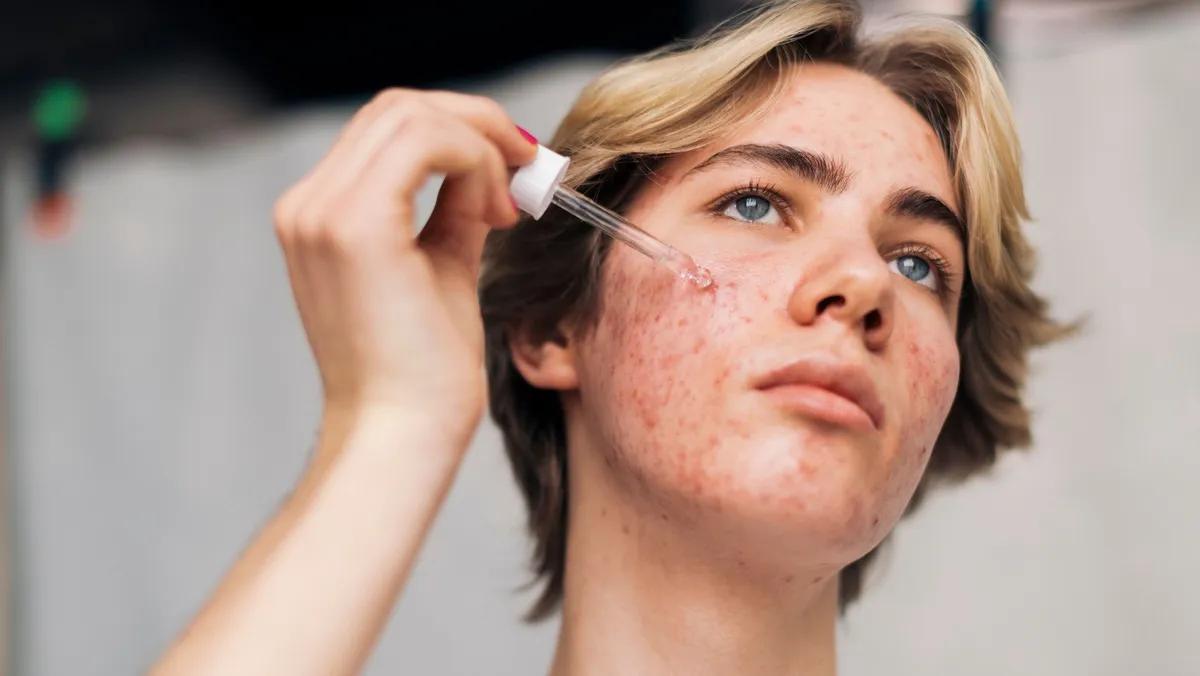
There is no strong evidence that any single food causes acne, nor is abstaining from chocolate or dairy products a substitute for proven medications.
However, research suggests that high-glycemic-index foods, such as sweetened beverages, sweets, and bread made from highly refined flour, may increase insulin and insulin-like growth factor 1 (IGF-1), which may stimulate sebum production, keratinization, and hormonal signals associated with acne.
Observational studies have linked milk, particularly among some adolescents and young adults, to an increased risk of developing or worsening the condition, but these findings do not prove that milk is the direct cause, nor does the relationship appear in all individuals.
In a systematic review and meta-analysis published in November 2025, researchers found that greater adherence to the Mediterranean diet was associated with less severe acne, but was not significantly associated with a lower likelihood of developing the disease in the first place.
The review included only 5 studies and 765 participants, and the quality of evidence was low due to the small sample sizes, the studies’ reliance on observation, and the large variability between them. Therefore, the researchers said that the results are not sufficient to describe the Mediterranean diet as a treatment for acne, and that better-designed trials are needed.
A practical approach might be to reduce highly sugary and processed foods, and eat a balanced diet rich in vegetables, whole grains, and legumes, while monitoring the relationship between a specific food and grains rather than randomly eliminating entire food groups.