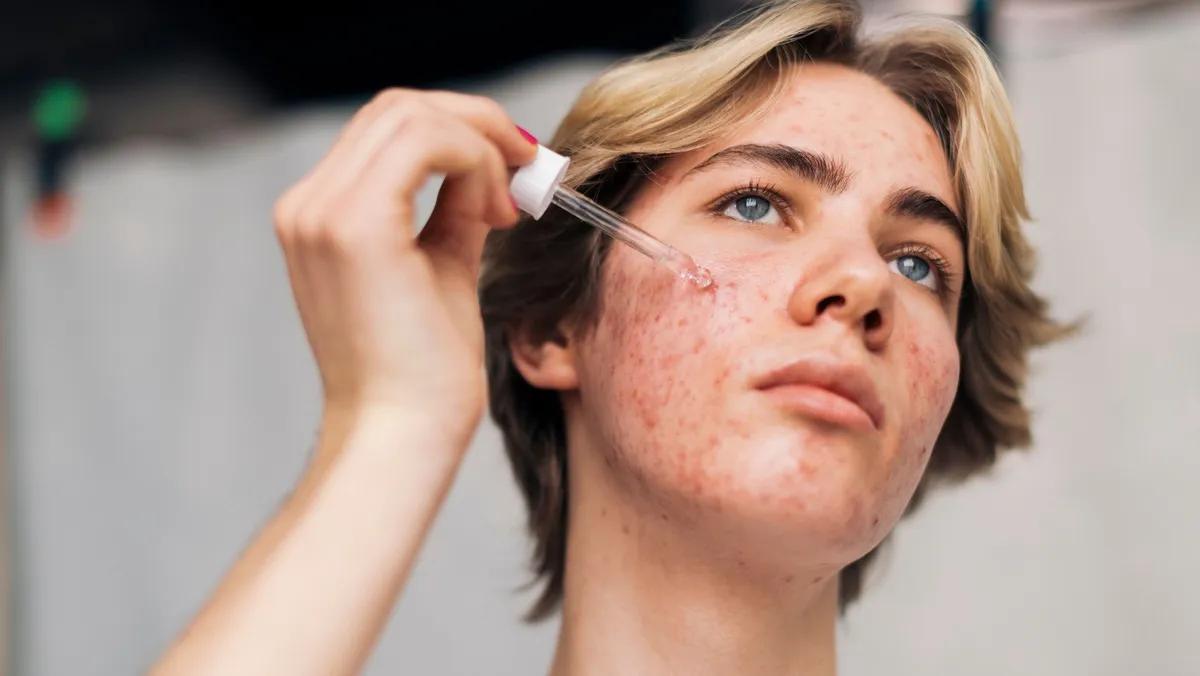
But the presence of these bacteria alone does not mean infection, as they live naturally on the skin of healthy people as well. Recent research suggests that the problem may be related to an imbalance between their strains and the way the immune system reacts to them, rather than acne being a simple bacterial infection that requires all skin microbes to be eliminated in order to treat it.
The role of hormones in acne
Male hormones, or androgens, play a key role in acne, even when their levels in the blood are within normal ranges. During puberty, the sebaceous glands enlarge under the influence of these hormones and produce larger amounts of sebum, which explains the widespread prevalence of acne among teenagers.
Genetic predisposition may increase the sensitivity of sebaceous glands to hormones, and therefore the chances of severe injury and scarring are higher in those with a similar family history.
Acne does not necessarily disappear after the end of adolescence; it may persist into adulthood or appear for the first time after the age of twenty-five.
The American Academy of Dermatology says that between 20 and 40 percent of women who develop acne in adulthood did not develop it during adolescence, but rather it first appeared in adulthood.
Hormonal acne in women often appears as inflamed, deep pimples around the jaw and chin, and may increase before menstruation. In some cases, it may be associated with polycystic ovary syndrome, especially if accompanied by irregular periods, increased facial and body hair, hair loss, or weight gain.
However, the sudden and severe appearance of acne in an adult woman, especially with signs of increased male hormones, may warrant a medical evaluation to rule out ovarian or adrenal gland disorders.