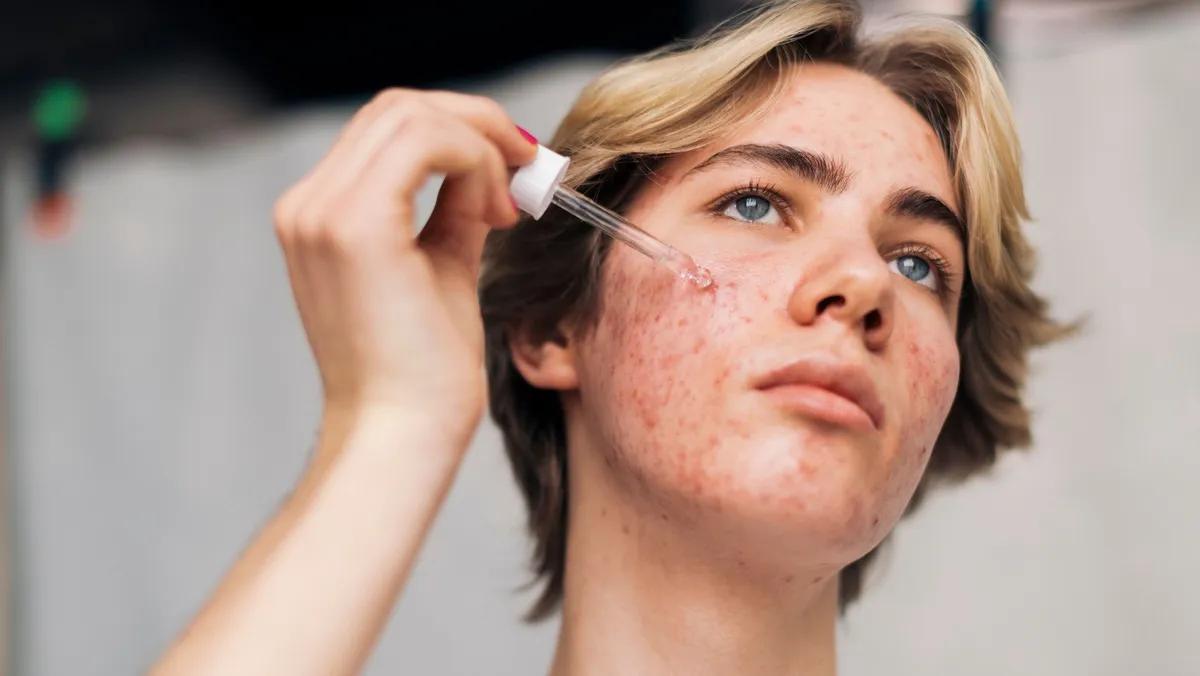
Does acne return after treatment?
A group study published in JAMA Dermatology in 2025 showed that the drug isotretinoin does not prevent the recurrence of acne in all patients.
The researchers analyzed data from 19,907 patients aged 12 years and older who had received treatment for at least 4 months, and found that 22.5% subsequently required new treatment due to a recurrence of acne, while 8.2% received another course of isotretinoin.
Higher cumulative doses were associated with lower chances of relapse and treatment repetition, but increasing the daily dose did not provide a clear additional benefit in patients who had reached an appropriate cumulative dose.
The researchers said the findings support the possibility of adjusting the daily dose according to the patient’s ability to tolerate dehydration and side effects, rather than assuming that a higher daily dose is always better, but the study was observational and relied on insurance claims data, and therefore does not prove a causal relationship on its own.
The potential link between isotretinoin and depression or suicide has been a subject of debate for decades, but an analysis published in JAMA Dermatology, which included 25 studies and more than 1.6 million people, found no increase in the relative risk of psychiatric disorders or suicide at the population level of those who used the drug.
The absolute risk over one year for suicide, suicide attempt, suicidal thoughts and self-harm was less than 0.5%, while the combined risk of depression was 3.83%.
Despite the reassuring results, the researchers stressed the need to monitor mood, because rare psychological responses may occur in some individuals, and because severe acne itself may be linked to psychological distress and depression.